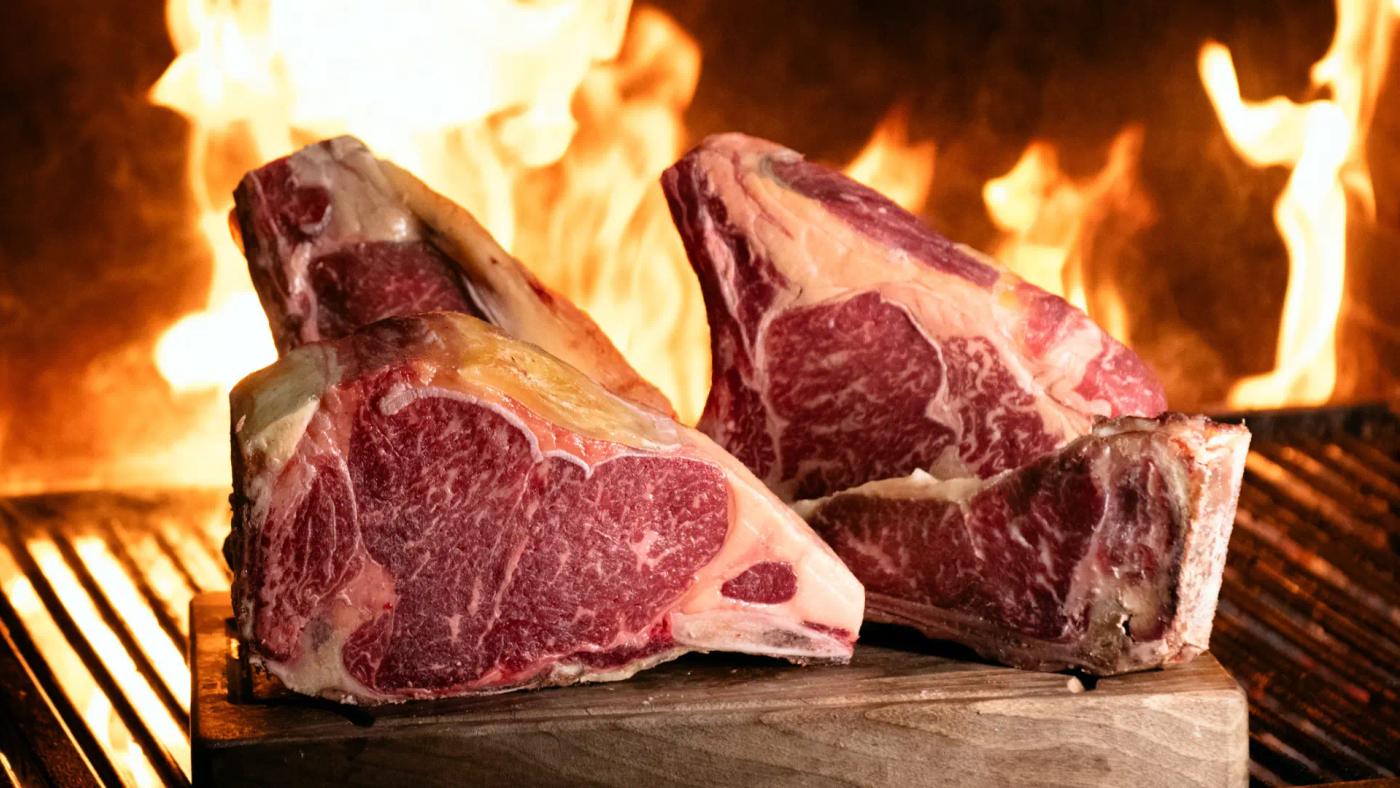
What is meat marbling and how does it make a difference?
Surely at some point, while looking at a steak that takes your breath away, you’ve noticed those small white veins tracing through the meat. That’s what we call marbling, and believe us, it is the best-kept secret of fine dining lovers. That intramuscular fat isn't there by chance: it is responsible for every bite being an explosion of juiciness, tenderness, and a flavor that stays etched in your memory.
Although many think this is exclusively a Wagyu thing, the truth is that breeds as native to us as the Rubia Gallega or the Friesian can also treat us to spectacular marbling. Everything depends on how the animal is cared for, its feed, and that final touch given by proper maturation.
What is meat marbling?
To explain it simply, marbling is the intramuscular fat that weaves between the meat fibers. It’s called this because the pattern it forms strongly resembles marble veins. Unlike the fat surrounding the piece, this shouldn’t be trimmed; in fact, it’s what we want to keep! Because when you cook it, the magic happens.
Whether a piece has more or less marbling depends on the breed’s genetics, but also on the animal having lived well and without rush. That’s why each cut is unique and tells its own story.
Why does marbling improve flavor?
When that meat hits the grill, the intramuscular fat starts to melt slowly. Instead of escaping, it stays inside the muscle, causing the piece to cook in its own juices and remain incredibly tender.
Furthermore, fat is the carrier of all aroma. As it melts, it softens the texture and boosts those nuances that make premium meat taste so different. It’s like a natural flavor enhancer that makes every bite much longer and more pleasant.
Which breeds stand out for their marbling?
Not all meats are the same, and there are some breeds that have a natural gift for creating these veins of flavor.
- Wagyu is, of course, the absolute king. Its level of marbling is so high that the meat almost resembles butter, melting in your mouth with incredible delicacy.
- The Rubia Gallega offers us something different: a perfect balance between power and aroma. When it comes from seasoned cows, the infiltration is just right to give us a deep, character-filled flavor.
- And let's not forget the Friesian. Older animals of this breed develop fantastic marbling that has earned it a place of honor on our grills.
Frequently asked questions about meat marbling
- Is marbling fat? Yes, it is fat, but the good kind. It is intramuscular fat, which provides the juiciness and real flavor. It has nothing to do with the external fat you usually trim away.
- Is more marbling always better? Not necessarily. The ideal is balance. We seek for the fat to be well-distributed so the experience is smooth and flavorful without being heavy.
- Which meat has the most marbling? Wagyu takes the prize, but never rule out a good Rubia Gallega or a dry-aged Friesian; their marbling is just as surprising and delicious.
- How can you spot marbling before cooking? You just need to look for those white lines tracing the red color of the meat. The finer and more consistent they are, the better the dinner you have ahead of you.
Do you want to check it out for yourself? We wait for you in Barcelona's Eixample to discover what true, good marbled grilled meat really means. You’ll love it!