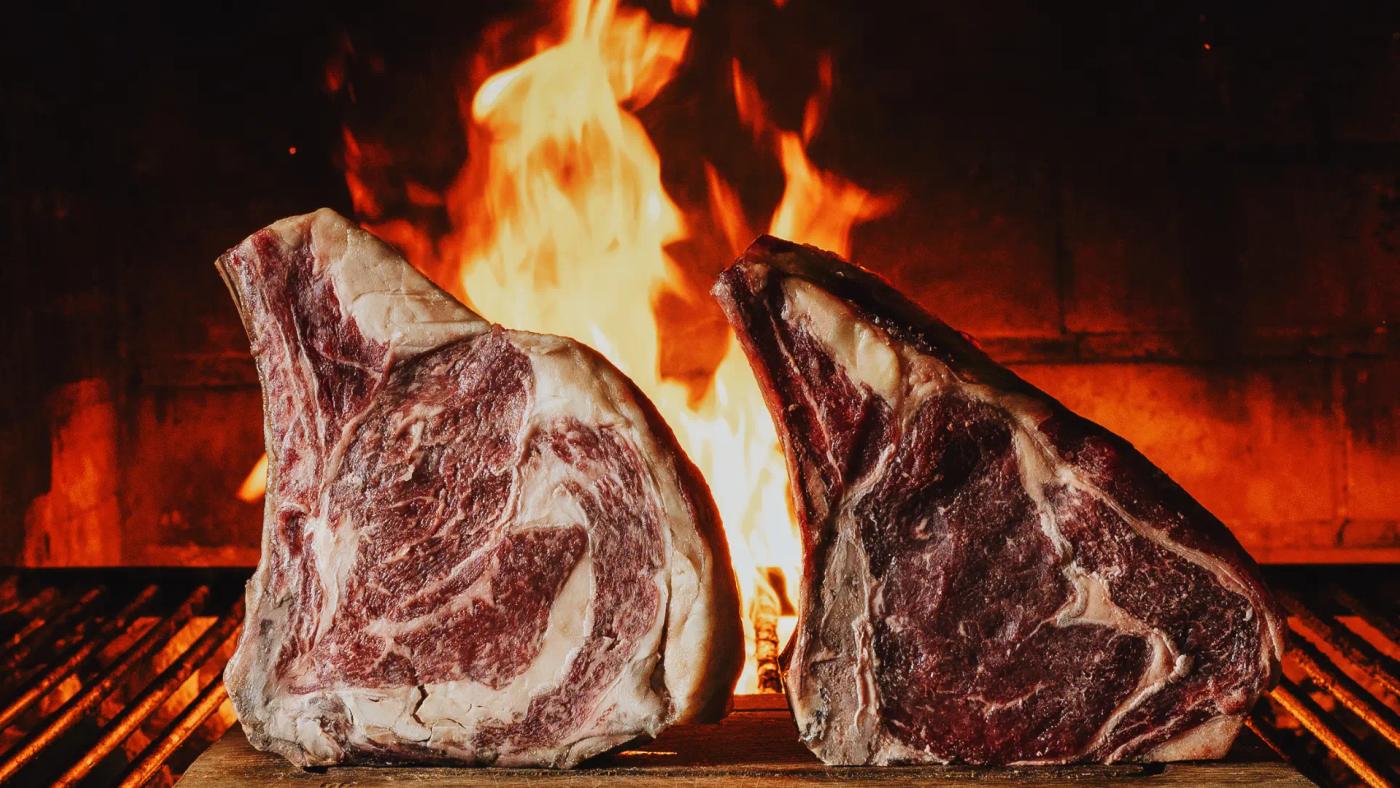
What is the difference between a grill, embers, charcoal, and firewood?
Often, terms like grill, charcoal, firewood, or embers are used interchangeably when speaking about a barbecue. However, each fulfills a well-defined function: the grill constitutes the physical support, while the embers provide the necessary heat and the characteristic aromatic profile. This distinction is fundamental to understanding why cooking with real fire far exceeds a conventional griddle or gas.
The metal grate or grill holds the food, but the secret lies in the lower part. Glowing embers emerge once the flame from the charcoal or wood dies down, offering a constant thermal source that cooks evenly and enhances the flavors. Likewise, the type of fuel directly impacts the result: charcoal stands out for its thermal stability, while firewood provides unique olfactory nuances depending on its variety. Ultimately, it is about cooking with residual heat and not directly with live fire.
The impact of temperature on cooking
Thinking that a hotter fire guarantees a better result is a recurring mistake. An uncontrolled flame scorches the exterior and leaves the interior raw, while embers distribute heat progressively, searing the piece and retaining its essential juices. This precise handling is crucial when preparing thick cuts, where time and intensity determine the exact doneness of the meat.
The aromatic role of smoke
Dripping fat onto the embers triggers a fundamental process in roasting: as it evaporates with the heat, it generates a dense and aromatic smoke that permeates the meat with a complexity that is difficult to replicate. This smoking must be subtle and balanced, as an excess would alter the natural flavor of the product by adding unwanted bitter notes.
Adapting the fire according to the type of cut
Each piece demands specific thermal treatment. Cuts with abundant intramuscular fat benefit from slow exposure to melt the marbling properly, while leaner options require quick cooking so as not to compromise their juiciness. Therefore, mastering the embers requires deep knowledge of the raw material.
Frequently asked questions about grilled meat
- Is a grill the same as embers?: No, the grill is solely the structure where the meat rests, while embers represent the heat generated by the combustion of charcoal or wood without direct flame, responsible for ideal cooking and aroma.
- Is it preferable to use charcoal or firewood?: It depends on the objective. Charcoal guarantees homogeneous and easy-to-dose heat, while the aromatic woods of firewood enrich the dish with changing nuances. The primary goal is to adapt the technique to enhance the virtues of each piece.
- What is the unique flavor of grilled meat due to?: It comes from the interaction between continuous heat, subtle smoke, and evaporated fat. This cycle surrounds the meat and enhances its natural qualities in an incomparable way.
- Is there a universal cooking method for all meats?: Absolutely not. Needs vary depending on the cut: meats with high fat infiltration allow for longer processes, while lean cuts require maximum precision to preserve their juices.
- Where to taste an excellent grilled roast in Barcelona?: If you are looking for a steakhouse in Barcelona, at Carnal we treat each piece with the utmost rigor, using embers exclusively to enhance the meat's attributes, never to hide them. We invite you to discover our gastronomic proposal by consulting our menu and booking your table.